


Roadside Help at the Workplace Keeps Workdays Moving

A vehicle problem in the employee parking lot can throw off far more than one commute. A dead battery can leave you stuck after a long shift. A flat tire can make you late to a client meeting. Locked keys, an empty gas tank, or a damaged lug nut can turn a normal workday into a stressful wait for a tow. Roadside help at workplace locations gives drivers a faster way to get moving without trying to solve the problem alone.
For drivers across Orange County, the goal is simple: get professional help sent to the parking lot, garage, warehouse, office complex, or job site where the vehicle stopped. You should not have to leave your car overnight, ask a coworker for tools, or risk damage by forcing a quick repair.
Roadside Help at the Workplace Starts With Safety
Workplace parking areas are busy, especially around shift changes. Cars are backing out, delivery vehicles are moving through, and drivers may be distracted by the end of the day. If your vehicle breaks down at work, take a moment before opening the hood or starting a tire change.
Park in a visible location if the vehicle can be moved safely. Turn on your hazard lights, keep doors locked if you are waiting alone, and stay out of traffic lanes. If you are in a parking structure or a large industrial site, note the level, entrance, building number, or nearest landmark. That information helps a mobile technician find you quickly.
If the vehicle is already in a safe parking space, it is usually best not to keep trying the same failed fix. Repeated jump-start attempts, forcing a key into a lock, or driving on a low tire can create a larger and more expensive problem. A trained roadside technician can assess what is actually wrong and complete the job with the right equipment.
The Right Mobile Fix for Common Workday Problems
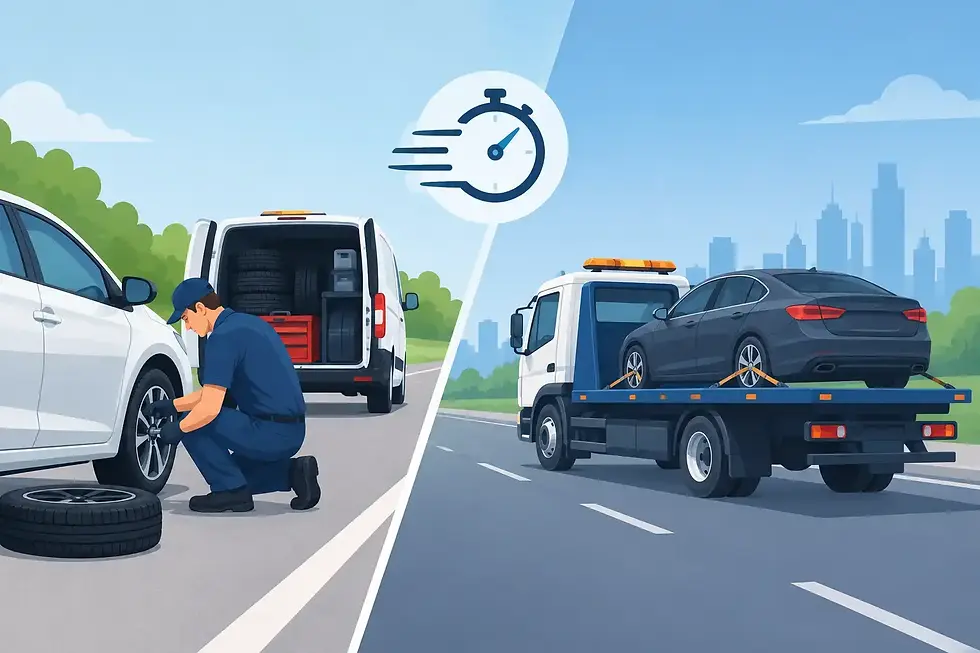
A roadside problem does not always mean you need a tow. Many issues can be handled right where the vehicle is parked. The right service depends on the condition of the car, the tire, the battery, and whether the vehicle can safely drive once the repair is complete.
Dead battery after a shift
A battery can fail without much warning, particularly after lights, electronics, or accessories have drained it during the day. A professional jump start can get the vehicle running, but a battery that will not hold a charge may need to be replaced on site. Mobile battery delivery and installation can save you from arranging a ride to an auto parts store or waiting around for a shop appointment.
If the engine starts after a jump, do not assume the problem is gone. Let the technician know if the car has been slow to start, if the battery warning light came on, or if the battery is several years old. That context helps determine whether a jump start is the practical solution or whether a new battery is the safer choice.
Flat tire in the parking lot
A tire can lose air while your car is parked, whether from a nail, a valve issue, curb damage, or a sidewall problem. Driving on a flat, even for a short distance across a lot, can ruin the tire and possibly damage the wheel.
A technician can install your usable spare, assess whether the tire may be repairable, or provide mobile tire replacement when a spare is not available. The condition of the tire matters. A small puncture in the repairable area may be fixable, while a sidewall tear, severe tread damage, or a tire driven flat usually calls for replacement.
Locked out with keys inside
Getting locked out at work is frustrating, especially when your badge, wallet, and phone charger are inside the car. Avoid prying a door open or using makeshift tools. Those shortcuts can damage weather stripping, window glass, lock mechanisms, or airbags.
Professional vehicle lockout assistance is designed to regain access without damaging the vehicle. Have the make, model, and approximate year ready when you request service. If your vehicle has special security features, the dispatcher can plan for the right approach before the technician arrives.
Out of gas before the drive home
An empty fuel tank is more common than most people admit. A long commute, a changed route, a fuel gauge issue, or a busy day can leave a driver stranded before they leave the property. Fuel delivery gets enough gasoline to help you reach a nearby station safely.
If you run out of fuel, do not repeatedly crank the engine. Tell the service provider the fuel type your vehicle needs, such as regular gasoline, premium gasoline, or diesel. Providing the correct details prevents delays and protects your vehicle.
Stuck locking or stripped lug nuts
A flat tire becomes much harder when the lug nuts will not come off. The locking key may be missing, a lug nut may be stripped, or corrosion may have seized the hardware in place. Trying to remove it with the wrong socket can damage the wheel, studs, or brake components.
Locking lug nut removal and stripped lug nut removal require specialized tools and careful technique. This is one situation where calling a professional early can prevent a simple tire issue from becoming wheel damage or a vehicle that needs to be towed.
Keep Work and Fleet Vehicles From Losing the Day
For a personal vehicle, roadside trouble may mean an inconvenient evening. For a fleet vehicle, it can mean missed deliveries, delayed appointments, an idle crew, or a customer waiting for service. On-site roadside support helps businesses get a vehicle assessed and repaired where it stopped whenever the issue is suitable for mobile service.
Fleet operators should keep current vehicle information available for drivers, including license plate numbers, tire sizes, approved payment details, and the location of spare tires or locking lug nut keys. A driver who can quickly explain the issue and exact location helps reduce downtime.
It also helps to set clear expectations for employees. Drivers should know who to notify, whether they should remain with the vehicle, and when a vehicle must be removed from service. A jump start or tire change may get a vehicle back on route, but repeated battery failures, damaged tires, or warning lights may require follow-up maintenance before the next shift.
What to Tell a Workplace Roadside Dispatcher
Fast service starts with accurate information. When you call or book mobile assistance, provide the vehicle make, model, color, and exact location. For a large workplace, include the business name, parking area, gate instructions, floor number in a garage, and a nearby landmark.
Explain the actual problem, not just the outcome. “The car will not start and the lights are dim” is more useful than “I am stuck.” “The front passenger tire is flat and my spare is under the cargo floor” helps the technician arrive prepared. Mention any special concerns, including a missing wheel lock key, an electric vehicle, low clearance, or a commercial vehicle.
Ask for the price before dispatch and confirm what the quoted service includes. Clear rates and no hidden fees matter when you are already dealing with an unexpected problem. A reputable provider should explain the expected service, give straightforward pricing, and let you know if conditions at the vehicle could change the scope of work.
J’s Roadside Services provides 24/7 mobile assistance for workplace parking lots and other stranded locations throughout Orange County and nearby Southern California communities. Technicians arrive equipped for common battery, tire, lockout, fuel, and lug-nut issues, so the focus stays on getting the job done correctly instead of sending you on a search for parts or tools.
Do Not Let a Parking Lot Problem Become a Bigger Repair
The quickest choice is not always the safest one. A coworker may offer jumper cables, but an incorrect connection can cause damage. Someone may have a jack, but a vehicle lifted on unstable ground can be dangerous. You may be tempted to drive slowly on a flat tire, yet even a short distance can turn a repairable puncture into a replacement.
Professional roadside service is especially useful when you are alone after hours, parked in an unfamiliar area, managing a busy schedule, or responsible for a company vehicle. You get help at your location, a direct explanation of the work, and a clear next step if the vehicle cannot safely return to the road.
If your car is stranded at work right now, stay safe, gather your vehicle and location details, and request help before the small problem gets worse. A fast mobile response can turn an interrupted workday into a manageable delay and help get you home.


Comments