


Your Orange County Roadside Assistance Guide

A dead battery in an Anaheim parking structure, a flat on the 405, or keys locked inside your car at a Huntington Beach grocery store can turn a normal day into a stressful one fast. This Orange County roadside assistance guide explains what to do first, which help you may need, and how to protect yourself while you wait. Don’t stress, just call for the right service and focus on getting safely home.
Start With Safety, Not the Repair
The first decision is not whether you can fix the problem yourself. It is whether the location is safe enough to remain in or near your vehicle. Pull as far from moving traffic as possible if the vehicle can still be moved. Turn on your hazard lights, set the parking brake, and keep passengers away from the traffic side of the vehicle.
On a freeway shoulder, especially near the 5, 405, 55, 57, or 91, staying inside the vehicle with seat belts fastened is often safer than standing outside. If smoke, fire, a fuel smell, or another immediate hazard is present, move well away from the vehicle and call emergency services first.
Once you are in a safer position, take note of your exact location. A street address is ideal, but freeway direction, the nearest exit, a cross street, parking lot name, or a visible business can help a technician find you without delay. Your phone’s map pin is useful too, but give clear details in case a dispatcher needs to confirm where you are.
Orange County Roadside Assistance Guide: Match the Problem to the Service
Roadside issues are rarely convenient, but they are often straightforward when the technician arrives with the right equipment. Giving an accurate description during dispatch helps prevent wasted time and makes sure the service provider brings what the job requires.
Dead Battery or No-Start Problem
If the dash lights are dim, the engine clicks, or nothing happens when you turn the key, a jump start may be the answer. But not every no-start condition is a dead battery. A repeated clicking sound can indicate battery trouble, while a single heavy click or no response at all may point to a different issue.
A professional can test the situation, provide a safe jump start, and help you decide whether a replacement battery is the smarter next step. If the battery is old, leaking, swollen, or repeatedly failing, driving away after a jump may only postpone the problem. Mobile battery delivery and installation can save a trip to a store or repair shop.
Flat Tire, Damaged Tire, or Missing Spare
A flat tire is one of the most common calls, but the right solution depends on the damage and the equipment in your vehicle. A spare-tire change works when you have an inflated, usable spare and the correct key for any wheel lock. If the spare is flat, absent, or unsafe for the trip you need to make, mobile tire repair or replacement may be the better option.
Do not keep driving on a visibly flat tire. Driving even a short distance can damage the tire sidewall and wheel, turning a repairable puncture into a replacement job. Avoid trying to use a tire sealant unless you understand the tire damage and your vehicle manufacturer permits it. Some punctures can be repaired, but sidewall cuts, blowouts, and severe tread damage usually cannot.
Locked Out of Your Vehicle
Vehicle lockouts happen to careful drivers every day. Your keys may be on the seat, in the trunk, or trapped in a locked vehicle while the engine is running. Calling for professional lockout assistance is usually safer than forcing a door, breaking a window, or using improvised tools that can damage weather stripping, locks, airbags, or electronics.
Tell dispatch the vehicle year, make, and model, whether the keys are visible, and whether a child, pet, or vulnerable passenger is inside. If someone is in immediate danger, call 911 before arranging roadside service.
Empty Fuel Tank
Running out of fuel can happen when traffic, a faulty fuel gauge, or a missed exit changes the plan. Get your vehicle safely off the road if possible, then request gasoline delivery. Be ready to confirm the fuel type your vehicle needs. Gasoline and diesel are not interchangeable, and guessing can create a much bigger repair problem.
After fuel arrives, the vehicle may need a moment before it restarts, particularly if it ran completely dry. If it does not start, do not keep cranking the engine repeatedly. Let the technician know exactly what happened so they can guide the next step.
Locking or Stripped Lug Nuts
A tire change can stop cold when a locking lug nut key is missing or a lug nut is stripped, rounded, cross-threaded, or overtightened. This is not a job for force and frustration. Incorrect tools can damage the wheel, break a stud, or make a roadside tire problem more expensive.
Specialized locking lug nut removal and stripped lug nut removal are designed for this situation. Let the dispatcher know if a shop recently worked on the wheels or if you know the lug nuts are damaged. That detail helps ensure the technician arrives prepared.
What to Have Ready When You Call
A quick, accurate dispatch begins with a few details: your location, vehicle year, make, model, color, the problem you are seeing, and a callback number. If you need tire help, share the tire size if you can find it on the sidewall. For a lockout, mention whether the vehicle is running. For a battery issue, explain whether lights, accessories, or the engine respond at all.
It also helps to ask for a quote before service begins. Roadside help should not come with surprises after the work is done. A clear quoted and guaranteed rate lets you make a decision with confidence, especially when you are stranded late at night or far from home.
If you expect to seek insurance reimbursement, keep your service receipt and note the date, location, and type of assistance provided. Coverage varies by policy, so reimbursement is never automatic, but organized documentation makes the process easier.
What Fast, Professional Service Should Look Like
A good roadside experience is more than a technician arriving quickly. You should receive clear communication about the expected arrival window, the service being dispatched, and the price. In much of Orange County, a 30-60 minute arrival expectation may be realistic, but traffic, weather, freeway closures, distance, and peak call volume can affect it.
The technician should assess the issue, use appropriate equipment, and complete the job without shortcuts. That matters on everything from battery installation to wheel service. A hurried repair may get a vehicle moving for a few minutes, but it can leave you with a bigger problem down the road.
J’s Roadside Services provides 24/7 mobile help throughout Orange County for passenger vehicles and fleets, including jump starts, lockouts, fuel delivery, tire service, battery installation, and difficult lug nut removals. Whether you are at home, work, a shopping center, or stuck roadside, the goal is simple: get the right technician to you and get the job done correctly.
When Roadside Help Is Not Enough
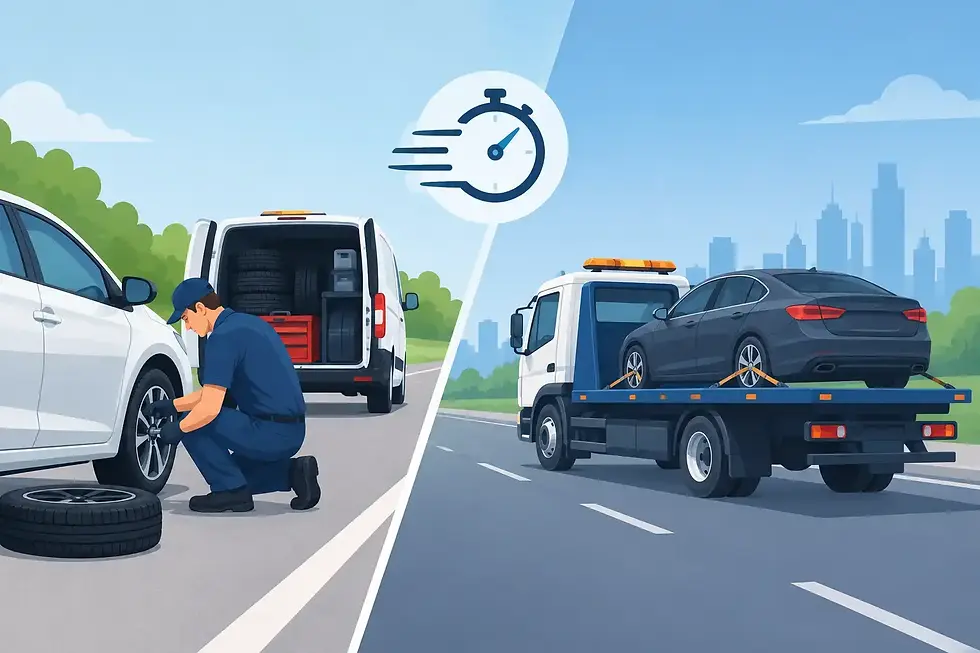
Roadside assistance can solve many immediate problems, but some situations require a tow, a repair shop, or emergency response. Call for towing-related support when the vehicle has collision damage, overheating, steering trouble, brake failure, a major fluid leak, or an engine issue that prevents safe driving.
Trust what the vehicle is telling you. A warning light alone may not always mean stop immediately, but a flashing check-engine light, overheating gauge, loss of braking, smoke, or a strong burning smell should be treated seriously. Saving a few minutes is not worth risking a breakdown, a collision, or major vehicle damage.
A Small Emergency Kit Makes a Big Difference
Keeping a phone charger, flashlight, water, reflective vest, first-aid kit, and basic vehicle documents in your car can make an unexpected stop less stressful. Add a tire pressure gauge if you regularly drive long distances, and check your spare tire occasionally. A spare that has been ignored for years may not be usable when you finally need it.
Still, preparation has limits. You do not need to become your own mechanic to handle a roadside emergency well. Get to a safe spot, share clear information, confirm the service and price, and let a qualified technician take it from there. The fastest path forward is usually one calm call and the right help on the way.


Comments